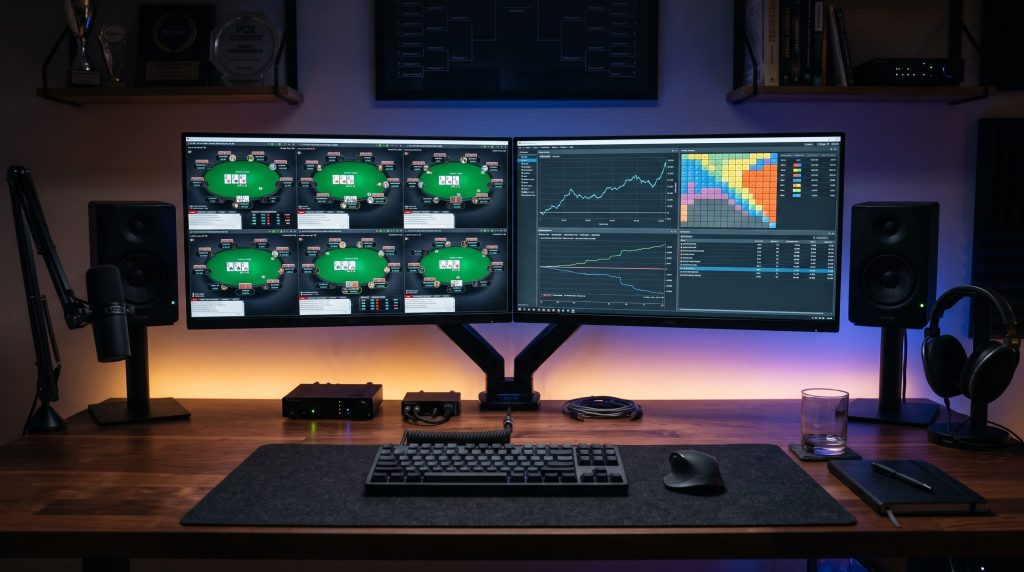

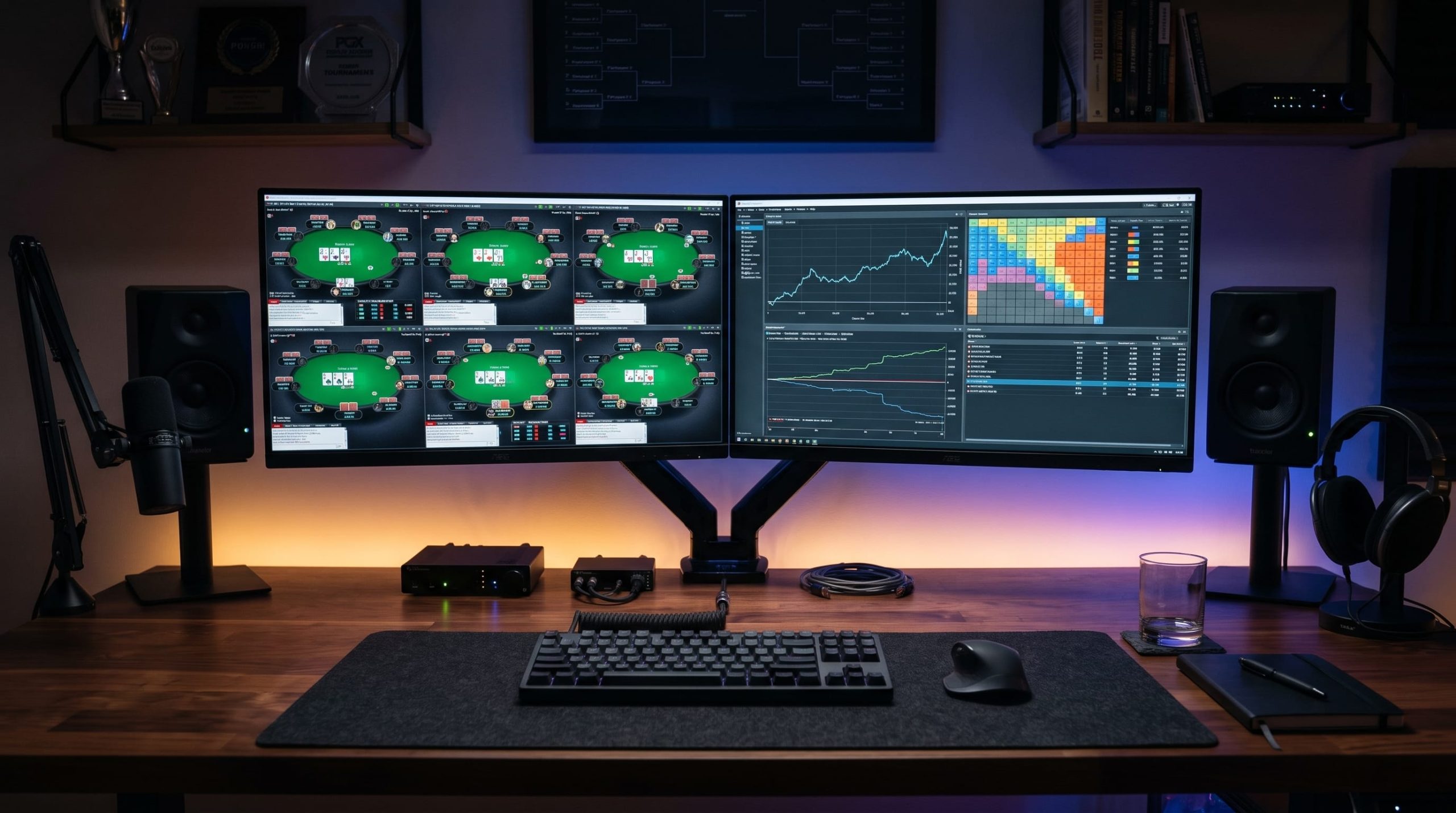




For nearly two decades, the heads-up display (HUD) was the undisputed badge of the serious online grinder. If you were multi-tabling twelve tables across three monitors without VPIP, PFR, 3-bet frequency, and Fold-to-C-bet stats hovering over your opponents’ avatars, you were considered a fish giving away free equity.
That era is facing its biggest existential crisis.
Operators across the online poker ecosystem have systematically closed the door on third-party tracking tools. Built-in anonymous tables, encrypted hand histories, and sweeping bans on external software have transformed the online landscape. What began as a niche experiment by recreational-focused skins has evolved into standard policy across several major global poker networks.
For recreational players, the removal of HUDs feels like a breath of fresh air.
For high-volume grinders, it represents an aggressive disruption to their hourly rate, multi-tabling capacity, and game selection strategy.
Can you still maintain a crushing win rate when the numbers disappear from your screen? Absolutely. But the playbook has changed completely.
The Great Divide: Protecting Casuals or Starving Grinders?
Poker operators justify software crackdowns with a single buzzword: “game ecology.”
The corporate argument is straightforward:
- New recreational players depositing $100 do not want to be tracked, categorized, and systematically dismantled by a regular running a 40-stat pop-up HUD.
- Leveling the technological playing field keeps casual players in the ecosystem longer, improving overall liquidity.
While protecting casual deposits is essential for the health of poker, the collateral damage falls entirely on dedicated grinders. Removing tracking tools prevents players from:
- Reviewing their own hand histories to identify technical leaks.
- Verifying the integrity of the games against collusion, multi-accounting, and bot networks.
- Multi-tabling high volumes efficiently, which drives down overall site traffic and rewards.
This has split the online poker world into two distinct camps: networks that treat high-volume regulars as a threat to eliminate, and open ecosystems that welcome dedicated grinders with open software policies and high rakeback rewards.
How to Win Without a HUD: Four Core Strategic Adjustments
If you are playing on sites that ban external software, trying to play your standard 16-table autopilot game will incinerate your bankroll. When individual HUD statistics disappear, you must replace micro-data with macro-exploitation.
Here is how modern pros generate a win rate in HUD-free environments:
1. Shift from Individual Stats to Population Tendencies
When you cannot see whether the small blind folds 78% or 62% to steals over a 500-hand sample, you must rely on baseline population tendencies. In modern online pools without HUDs:
- The average recreational player severely under-bluffs river raises and large barrel sizings.
- The average player over-folds to turn probe bets when the preflop aggressor checks back the flop.
- C-betting frequencies remain disproportionately high on dynamic, connected boards.
Instead of looking for opponent-specific outliers, baseline your strategy against the pool’s collective leaks.
2. Master the Native Color-Coding and Note System
Most sites banning third-party tools still allow native note-taking and color tags. Because you cannot rely on automated badges, every note you write must be actionable.
- Avoid generic notes like “plays bad” or “called with middle pair.”
- Record exact sizing and structural deviations: “Over-called 3-bet from SB with suited connector,” “Check-raised min-size on wet flop as pure bluff,” or “Folded BB to 2x open with 18bb stack.”
- Use color tags strictly for archetype profiles: Green for loose-passive recreations, Blue for tight-passive callers, Yellow for competent regulars, and Red for wild aggressive players.
3. Reduce Table Count to Reclaim Real-Time Table Awareness
HUDs allowed players to play 12 to 24 tables because the software processed information on their behalf. Without stats on the screen, visual information is everything.
- Cutting your table volume from 12 tables down to 6 or 8 tables immediately increases your win rate per 100 hands.
- You regain the ability to notice timing tells, showdown holdings from other players at the table, and changing dynamics when short stacks enter shove mode.
4. Exploit the “HUD-Free Delusion” of Your Opponents
Many recreational players believe that because trackers are banned, regulars no longer have an edge. They play looser, make more speculative preflop calls, and call down lighter because they feel anonymous. Recognize that HUD-free games often play substantially softer post-flop. Value-bet thinner, avoid ambitious triple-barrel bluffs against unverified opponents, and let the field pay you off with second-best pairs.
The Refuge for Grinders: The Value of Open Networks
While some major platforms continue to restrict third-party tools, smart grinders are diversifying their action across networks that actively support serious players.
On networks like the Winning Poker Network (WPN)—powering rooms like True Poker and BlackChip Poker—the philosophy is the polar opposite:
- Third-party tracking tools, customizable HUDs, and hand history reviews are fully permitted and supported.
- High-volume grinders are rewarded rather than discouraged, with transparent loyalty programs and flat base rakeback options scaling up to 65% for volume leaders.
- Transparency remains a core pillar, allowing grinders to analyze hand histories and track game integrity directly.
If your primary poker income relies on high-volume multi-tabling and data-driven exploitation, forcing yourself into closed, HUD-banned ecosystems may be capping your hourly earning potential.
Adapt or Migrate: The Choice Every Grinder Must Make
The online poker landscape in 2026 is not about whether HUDs are good or bad for the game. That debate is over.
The modern reality is about understanding which environment suits your skillset:
- If your edge lies in deep mental focus, visual awareness, exploiting recreational tendencies, and playing fewer tables with high win rates, HUD-free rooms offer massive pools of soft action.
- If your edge lies in volume, mathematical database analysis, multi-tabling precision, and maximizing bankroll growth through high rakeback, open networks like True Poker remain your natural home.
The grinders who complain about software policy changes are the ones who get left behind. The grinders who adapt their strategy to the rules of the room—or migrate to the platforms that value their action—are the ones who keep stacking chips.