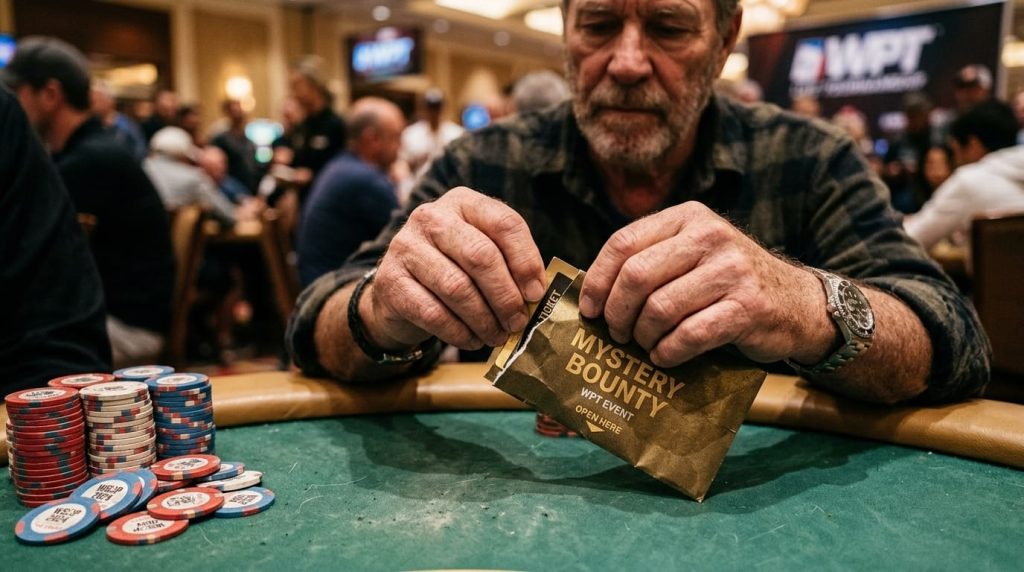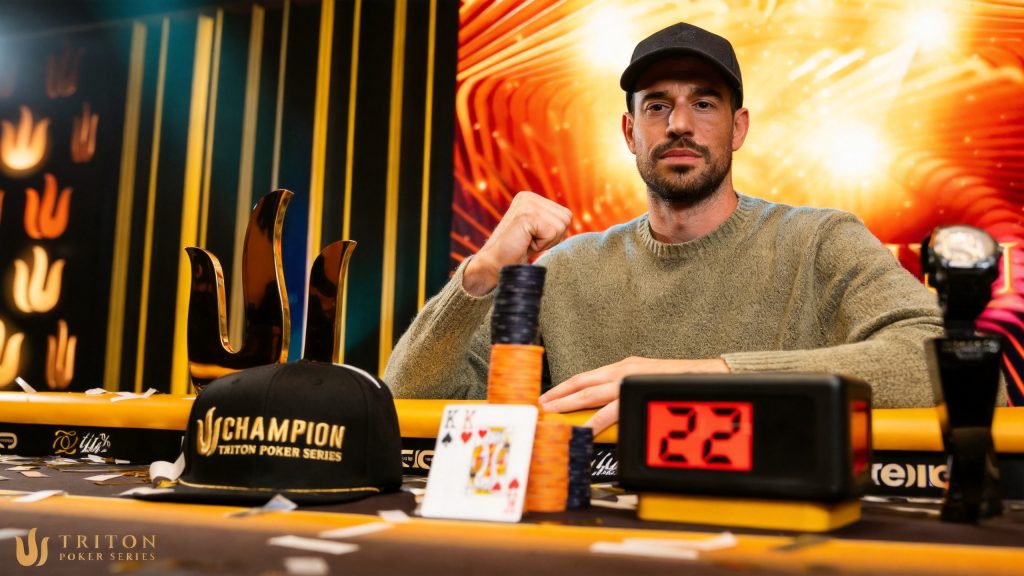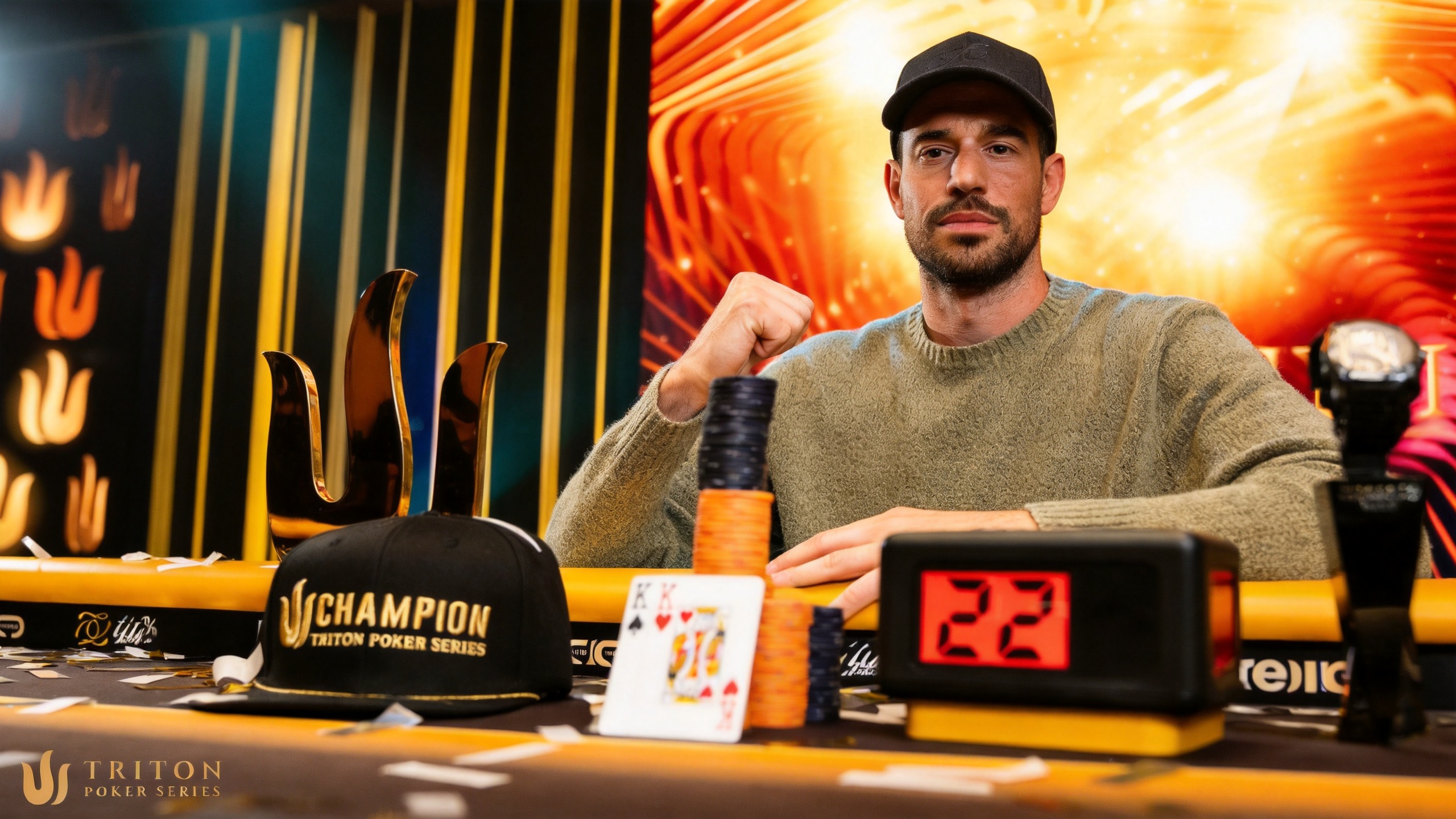

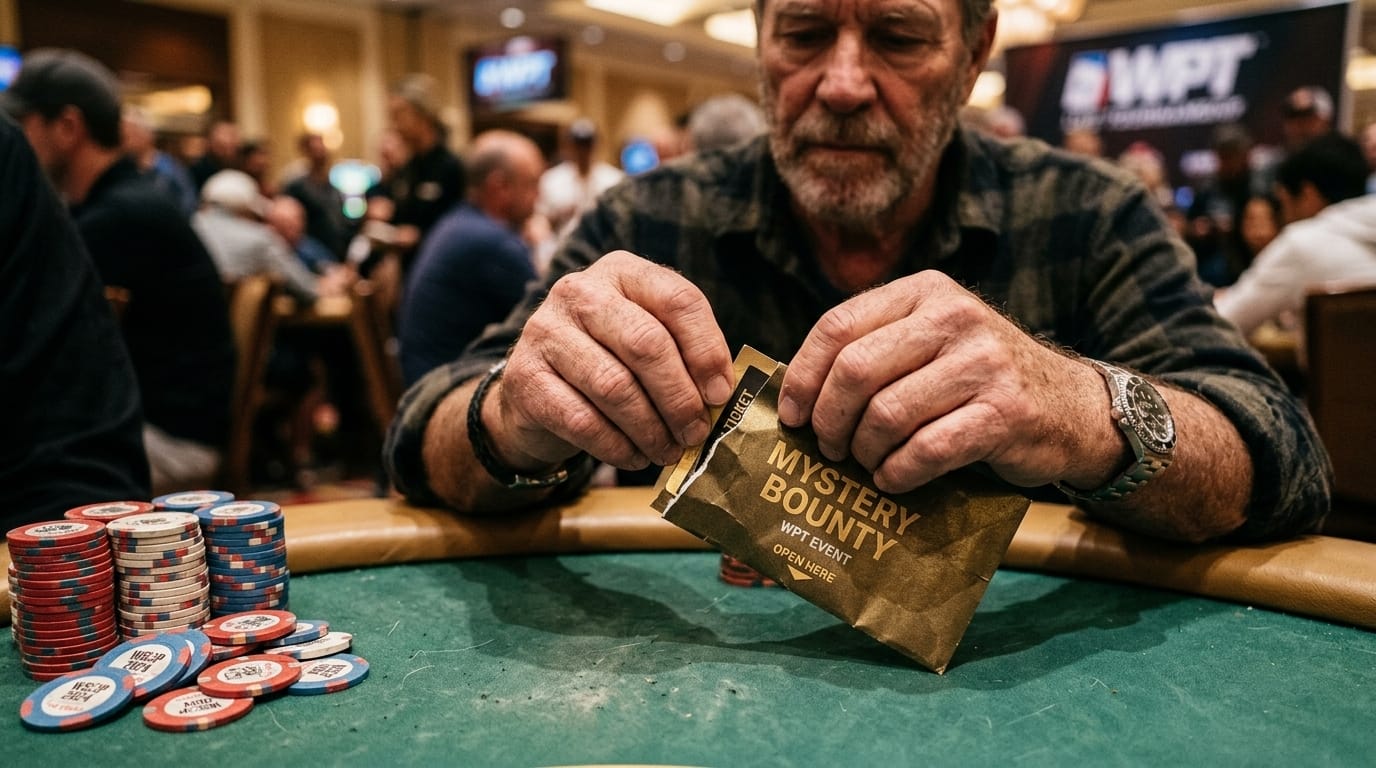




When Fabiano Kovalski pulled an enormous €385,000 Mystery Bounty at EPT Barcelona, it captured everything operators love about the format: raw drama, viral social clips, and life-changing money unlocked with a single envelope. From marquee live stops to major online festivals like the upcoming 888poker XL Autumn Series, Mystery Bounties have quickly sidelined traditional freezeouts and Progressive Knockouts (PKOs).
For recreational players, the attraction is obvious-it is a lottery ticket embedded inside a poker tournament. For regular grinders, however, treating a Mystery Bounty like a standard MTT or a classic PKO is a fast track to torching long-term return on investment (ROI).
To beat these fields, you must understand how randomized bounty distribution fundamentally distorts chip expected value ($cEV$) and Independent Chip Model (ICM) dynamics.
The Fundamental Flaw: Treating Mystery Bounties Like PKOs
The most common leak in modern MTT pools is assuming Mystery Bounties follow the same mathematical principles as PKOs. They do not.
- In a PKO: Bounty value is linear, transparent, and distributed across the entire tournament. Every knockout increases the bounty on the killer’s head, creating predictable equity thresholds that solvers can map with precision.
- In a Mystery Bounty: The bounty phase typically only activates on Day 2 (or in the money), and the payout pool is brutally top-heavy. In most structures, 50% to 70% of the entire bounty equity is concentrated in the top 1% to 2% of envelopes.
This changes the underlying game theory. You are not hunting incremental value; you are playing an MTT where the equity value of a short-stack knockout fluctuates wildly based on the envelopes remaining in the chest.
Converting Envelopes to Chips: Dynamic Bounty Equity
To know whether a marginal call is mathematically justified, you must convert the real-money bounty into tournament chips ($cEV$).
The baseline formula for bounty equity in chips is straightforward:
Bounty Value in Chips = (Average Remaining Bounty Value) / (Total Prize Pool) * Total Chips in Play
The catch lies in the word “Remaining.”
Unlike a regular tournament where chip equity remains relatively stable across levels, your required pot odds in a Mystery Bounty change every time someone pulls a slip from the box.
- Phase 1: The Golden Chest Window (Top Bounties Active)
When Day 2 begins and all top-tier mystery prizes are still available, the average bounty value is at its absolute peak. In shallow stack situations (10–18 big blinds), the bounty equity can easily add the equivalent of 25% to 40% of the pot. Facing a shove from a covered stack, calls that would be standard folds in a freezeout(e.g., K7s, Q9o, or small pocket pairs) become massively +cEV. - Phase 2: The Vacuum Period (Top Prizes Pulled)
The moment an amateur or regular pulls the top envelopes, the remaining bounty pool craters. The average bounty plummets toward the minimum payout (often little more than half a buy-in). Grinders who fail to adjust and continue calling wide shoves based on “it’s a bounty tournament” are hemorrhaging pure equity. The tournament has effectively reverted to a high-ICM freezeout.
3 Essential Exploits for Grinders
1. Stack Covering Is Life or Death
In a Mystery Bounty, having an opponent covered is infinitely more valuable than in a normal tournament. If you have 31 big blinds and the opener has 30, winning an all-in gives you a bounty attempt; if you have 29.5 big blinds, you get zero bounty equity. Protect your covering advantage aggressively. Avoid marginal coinflips against stacks that barely cover you, and attack players you narrowly cover to maximize your knockout equity.
2. Isolate Ruthlessly Against Vulnerable Stacks
When an ultra-short stack (sub-10 BBs) shoves and the top bounties are alive, standard calling ranges fly out the window. If you are in late position with a covering stack, flatting to invite multi-way action is often a mistake. 3-bet jamming to isolate the short stack and secure 100% of the envelope equity-even with speculative holdings-is often significantly more profitable than playing postflop with other covering players.
3. Weaponize the “Bounty Thirst” of Recreatives
Recreational players will call all-ins absurdly light to win a chance at the chest. Use this against them. Tighten your shoving ranges when you are the short stack being covered, as you will receive virtually zero fold equity. Conversely, when you hold premium monsters(JJ+, AK), use larger isolation sizing or direct jams-the pool will call you with dominated broadways and suited connectors just for the gamble of pulling an envelope.
Mystery Bounties are designed to inject casino-style gambling into disciplined poker formats. But behind the theatrical envelopes sits a hard mathematical equation. Track the chest, adjust your equity thresholds by the hour, and capitalize on a field that refuses to do the math.